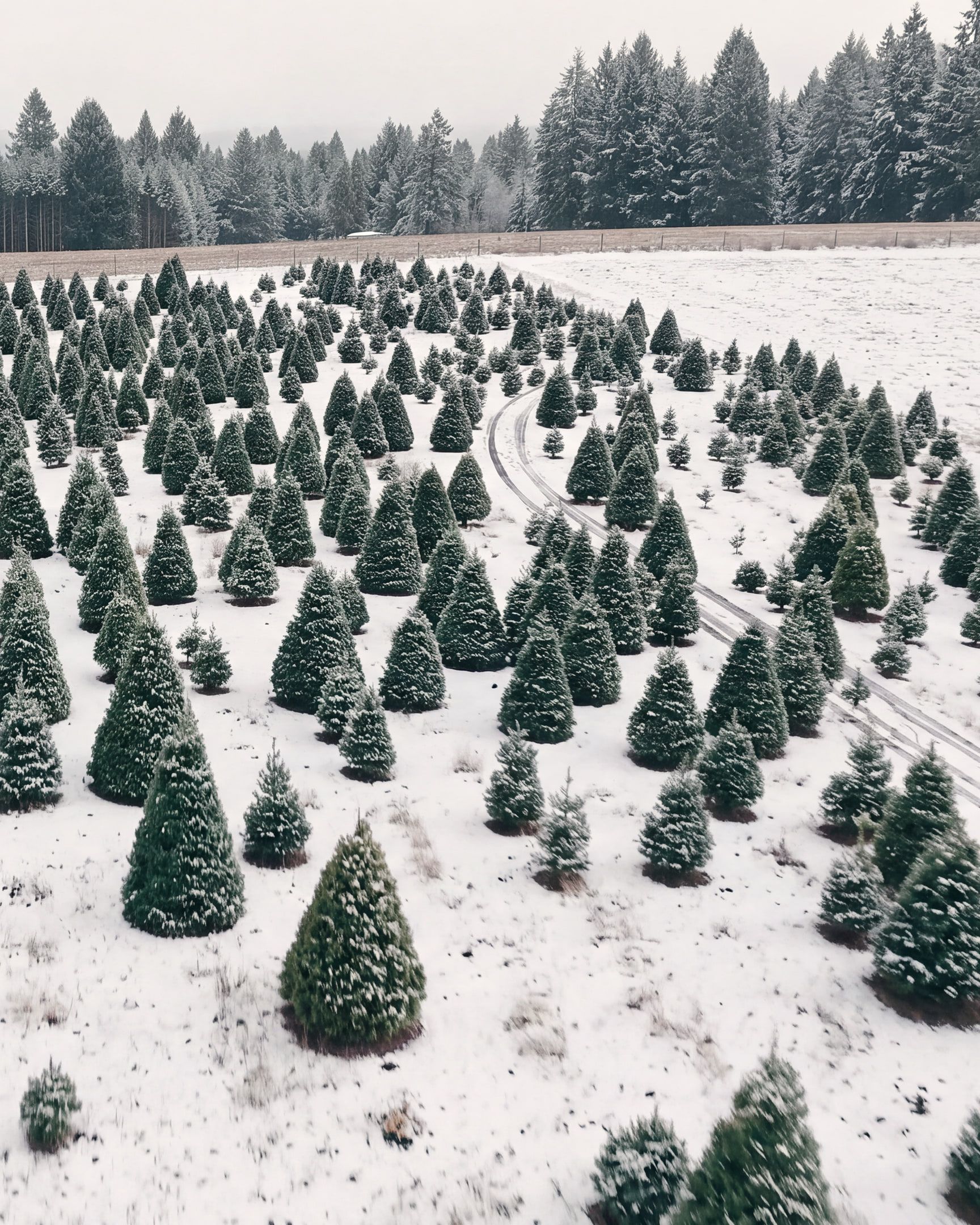
In the rows
How to choose your tree in the field
Measure at home, walk all the way around, check the trunk and the tree’s health, and take your time. A simple way to find the right tree in the rows.
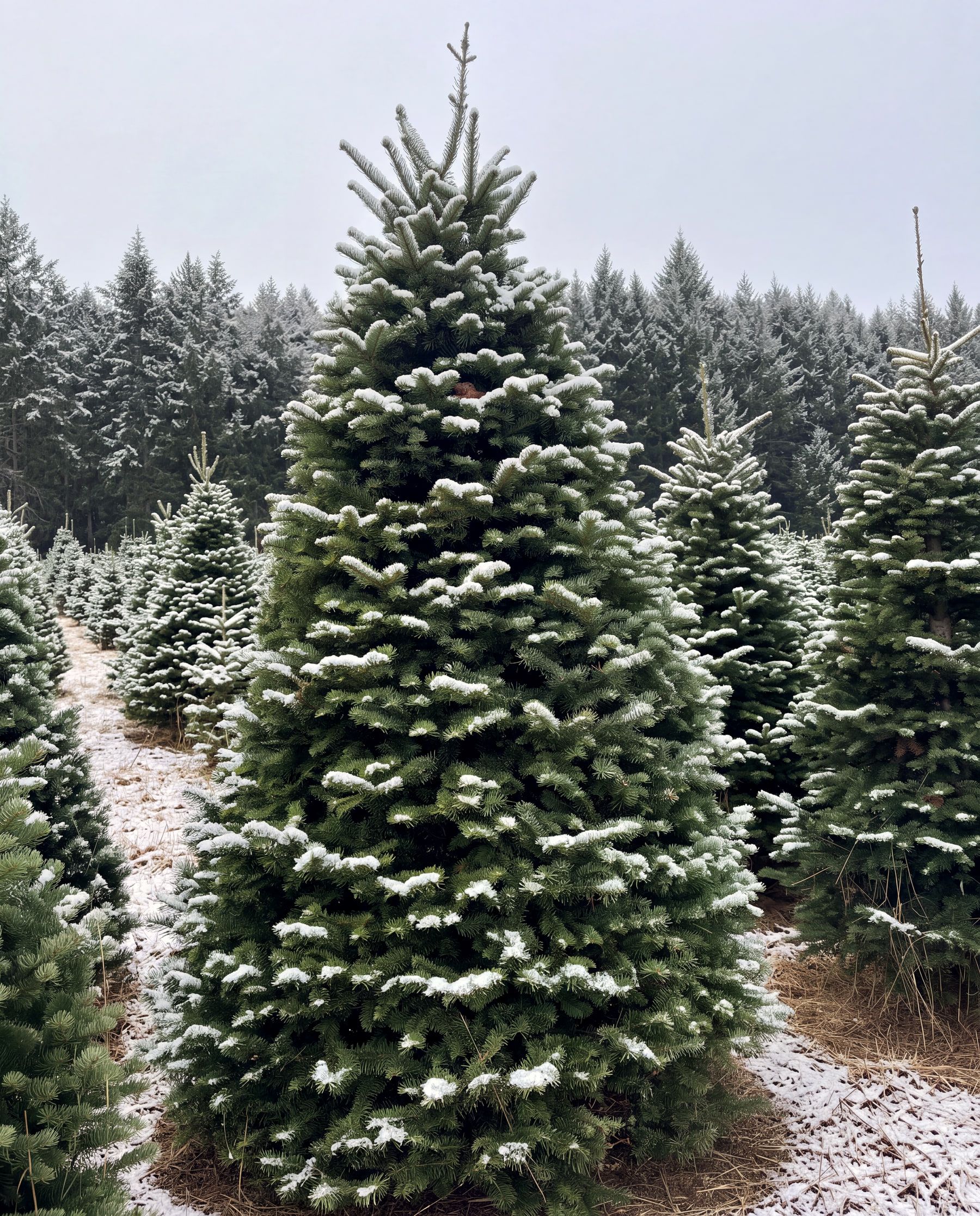
Choosing the tree is the best part of a U-Cut day, and the part families remember. It also goes better with a little method. None of this is complicated. It just saves you from a tree that will not fit through the door, or will not stand up straight in the stand.
Start at home, with a tape measure
Trees look smaller outdoors. In an open field, with the sky above and bigger trees around, a tree that seems modest can fill a living room. Iowa State University’s extension guide puts it plainly: trees in a field will not look as tall or as wide as they will in your home, so bring a tape measure.
Before you leave, measure:
- The ceiling height where the tree will stand.
- The width of the space, including room to walk around it.
- Your stand, both how wide a trunk it will hold and how much height it adds.
Then allow for what sits above and below the tree. University of Georgia Extension notes that a stand and a topper can easily add six inches or more, so choose a tree at least that much shorter than your ceiling.
Write the numbers down, or put them in your phone, and bring the tape with you.
Walk all the way around
From the path, every tree has a good side. Walk a full circle before you decide.
Look for an even shape from top to bottom and branches spaced so ornaments have room to hang. Then think about where the tree will stand. A tree with one thinner side can be a fine choice for a corner or against a wall, where that side faces away. A tree for the middle of the room needs to look good all the way round.
Stand back as well as close. Shape reads best from a few steps away.
Check the trunk
Look low, at the base of the tree.
- Is it straight? A straight trunk is far easier to set upright in a stand.
- Will it fit your stand? Check the trunk’s thickness against the stand you measured.
- Is there clear trunk at the bottom? You need a few inches of bare trunk to sit in the stand’s water. A few low branches can come off at home if needed.
Check that it is healthy
A growing tree is as fresh as it will ever be, so look for health instead:
- Even colour all the way round, without brown or yellow patches.
- No damage such as broken or dead branches where you plan to face it into the room.
- A few loose needles from the inside of the tree are normal. Evergreens shed old inner needles every year.
Take your time
There is no rush in the rows. Walk a little further than the first good tree. Let each person in the family have a say. Keep little ones in sight: the rows have low stumps underfoot, and other families will be cutting.
Our team can help as much or as little as you like. Some families want advice on every tree; others would rather explore on their own. Either is welcome.
Cutting and carrying it out
How you cut depends on the tools at the farm on the day, so ask the team when you arrive. Whoever does the cutting, keep the cut low and level. A low cut leaves more trunk to work with at home, and a level one helps the tree sit straight while you get it into water. Keep children and onlookers well back from the saw and from where the tree will fall.
Ask the team, too, how trees get from the rows to the car on the day. Then tie it down well before you drive. The 2026 U-Cut guide covers getting it home safely.
Once it is home
The care starts as soon as you are through the door: a fresh cut and water straight away. Our guide to keeping a fresh-cut tree fresh has the details.
Then come and walk the rows. The Visit page has the dates and the map.
Sources: Iowa State University Extension, Guide to Selection and Care of Christmas Trees; University of Georgia Extension, tips on selecting and caring for Christmas trees.